
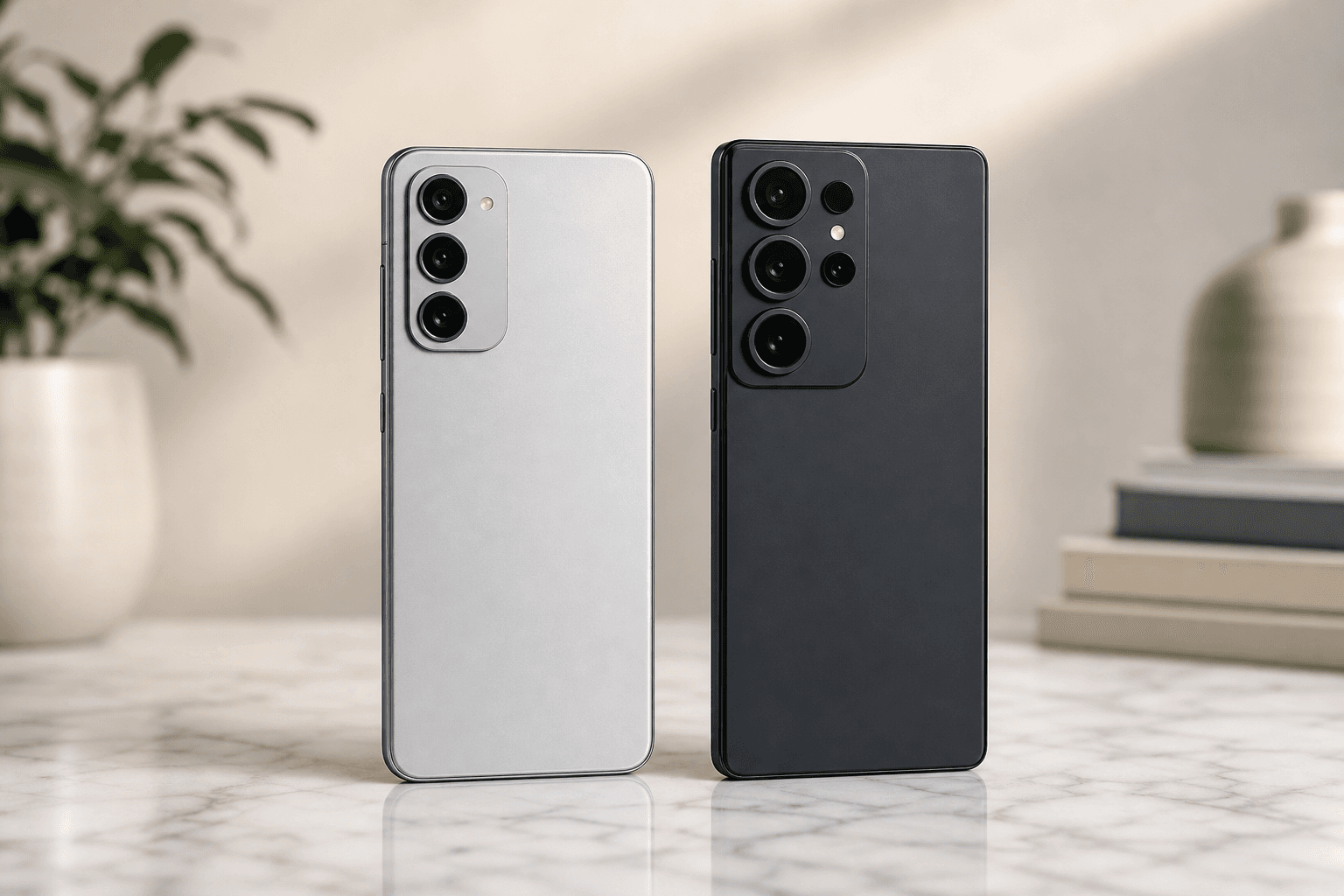
The brand war isn't about bad phones
Apple and Samsung both ship excellent flagships in 2026. The question isn't "which company fails" — it's which set of trade-offs matches how you actually use a phone for the next three years.
We carried an iPhone 16 Pro and Galaxy S25 Ultra through the same week: commute, office, weekend photography, and nightly video calls.
Design and build quality
Apple refined its titanium frame with tighter tolerances and fewer model variants — predictable, premium, conservative. Samsung pushed thinner bezels and more dramatic hardware including foldables Apple doesn't compete with at all.
Choose Apple if you want consistent design language year to year. Choose Samsung if you want visual innovation and foldable options.
Performance and speed
Apple's A18 Pro still leads sustained performance and gaming thermals. iOS extracts smoothness from 8GB RAM that Android needs 12GB to match in multitasking stress tests. Samsung counters with DeX desktop mode and aggressive split-screen workflows power users love.
For raw benchmarks, both feel instant in daily use. Differences appear under sustained load — gaming, video export, long Zoom calls with screen share.
Camera comparison
Apple strengths: Video stabilization, natural skin tones, color consistency when panning. YouTubers still default to iPhone for a reason.
Samsung strengths: Telephoto zoom range, 200MP cropping flexibility, AI object removal and scene optimization that rescues mediocre shots.
Still photography is closer than ever. Video remains Apple's clearest edge.
AI features in 2026
Apple Intelligence focuses on on-device privacy — writing assistance, smarter notifications, photo cleanup without uploading your library. Galaxy AI goes wider: live call translation, note summarization, generative editing tools people actually notice weekly.
Neither replaces a laptop for serious work, but Samsung's AI feels more visible today. Apple's approach ages better if privacy is non-negotiable.
Battery and charging
Samsung ships larger batteries and faster wired charging. Apple compensates with efficiency — both last a full day for typical users. Road warriors who top up between meetings benefit from Samsung's speed advantage.
Pricing and value
Samsung offers flagships, mid-range, and budget across more price points. Apple concentrates on premium tiers with stronger resale value. A three-year-old iPhone often recoups more at sale than an equivalent Galaxy.
Who should buy which?
Buy Apple if you own a Mac, iPad, or Apple Watch; shoot vertical video for social; or want the simplest long-term support experience.
Buy Samsung if you need the best zoom camera, want deep customization, or prefer faster charging and more AI tools out of the box.
Read our full iPhone 16 Pro vs Galaxy S25 Ultra review for scored testing results, or check the budget phone guide if flagship money isn't in the budget.